What Comes First in Malayalam Learning: Letters, Sounds, or Words?
If you live outside Kerala, you probably know how hard it is to teach your child Malayalam. You start with simple words around the house, like the Malayalam for “bottle” or “table.” You say it, they repeat it, and then life happens. By the next day, they’ve forgotten it.
It’s frustrating for you, and it’s confusing for them. Many parents feel like they are failing, but the problem isn't the child- it’s the method.
In Kerala, kids learn Malayalam because they hear it everywhere. But for kids in the US, UK, or Dubai, English is what they hear all day. Malayalam is a "quiet" language in their lives. Because of this, we can't teach them by just talking. We have to give them a way to see the language so they can finally understand it.
Why starting with words usually fails?
Most of us try to teach words first. We think that if they know enough words, they will start talking. But for a child who doesn't hear Malayalam daily, these words don't have a home in their brain. They are just random sounds.
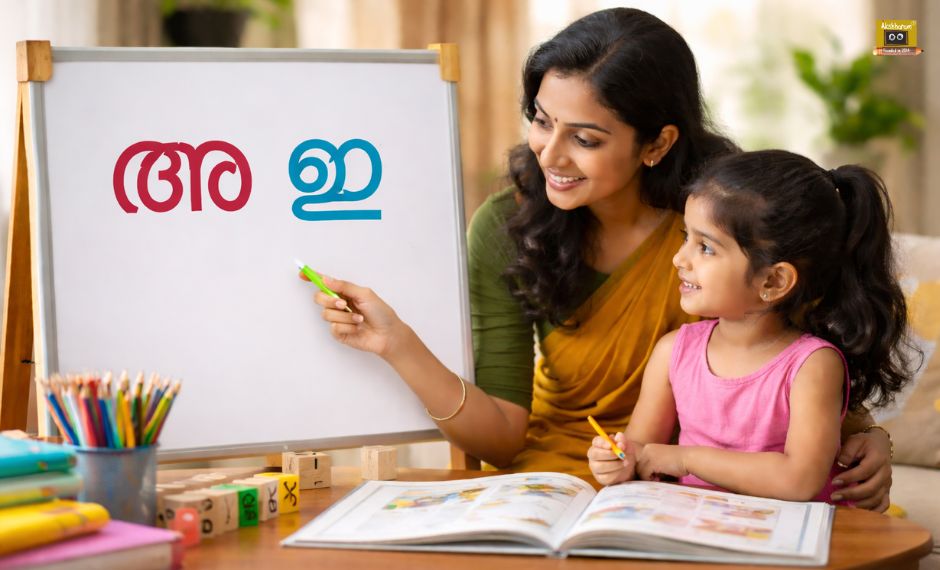
This is why, in a beginner Malayalam learning class online, we don’t start with a list of words to memorize. We start with the alphabet. For the children growing up outside Kerala, the alphabet is the only thing that makes the language real.
Learning the letters and the sounds
Malayalam is mostly written the way it sounds. Once they learn a letter properly, they can recognize that sound again and again. There are no confusing spelling rules like in English.
When we start with the Aksharamala (the alphabet):
They stop guessing: Instead of trying to remember a sound you made, they look at the letter and know exactly how to say it.
Their accent gets better: When a child sees the difference between the letters, they learn how to use their tongue and mouth correctly. This helps them sound more natural when they speak.
In our Malayalam classes for children, we take the time to let them get comfortable with the shapes of the letters. When a child can write their own name or read a simple word like "അമ്മ" (Amma), they feel proud. It’s no longer a task you are forcing on them; it’s a skill they actually have.
Building a vocabulary that sticks
Once your child knows the letters, we move on to words. But this time, it’s different. They aren't just memorizing; they are reading.
When kids see the letters and say the word out loud, they remember it for much longer. That’s why we focus on simple, everyday words that they can actually use at home with you.
We start with words like Amma, Achan, Chechi, and daily ones like Veedu, Paal, and Choru - even simple nature words like Mazha and Poovu.
The goal is not just reading. Kids should use these words for real things they see every day. That’s how Malayalam starts feeling natural, not like a class.
From reading to talking
The main goal for every parent is to hear their child speak. When a child can read, they start to see the patterns of how we talk. They notice how words change when we ask a question or tell a story. Because they have a strong foundation in the alphabet and a small bank of words, they get the confidence to try speaking.
They start with small things:
"Amma, vellam tha." (Mother, give me water).
Soon, those small sentences turn into real conversations with grandparents and cousins.
Why Akshharam is different?
We know that as a parent, your biggest goal is for your child to feel comfortable with who they are. You want them to be able to talk to their grandparents without feeling shy or needing you to translate every word.
That is why we don’t push them to speak perfectly from day one. Instead, we give them the letters and the sounds first. When a child understands the basics of the script, the fear of making mistakes goes away. They stop guessing and start understanding.
If you’ve been struggling to teach your child Malayalam at home, it might just be time to change the starting point. At Akshharam, we focus on a simple step-by-step approach: first letters, then sounds, and finally words. It’s the best way to help children build a connection to the language that actually lasts, so they can finally start sharing their own stories in their mother tongue.