
Easy Malayalam Pronunciation Tips for Difficult Letters
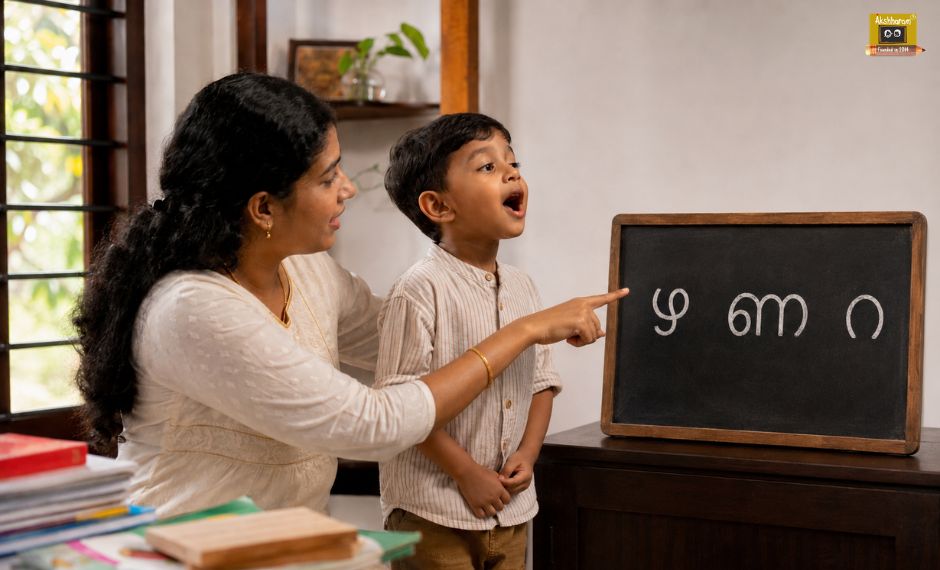
വാഴപ്പഴം (Vaazhapazham), പണം (panam), പ്രായം (praayam)- your tongue stumbled a little while pronouncing them, right? Well, Malayalam has a few letters that love testing our pronunciation skills. Among them, the letters ഴ, ണ, and റ are often confusing because they sound different from other letters and require slight changes in tongue placement. Many learners struggle to pronounce these letters naturally. But no worries, you’ve got the perfect solution! You don’t need any intense training or linguistic wizardry to sound right. With a few practical techniques, simple pronunciation tricks, and knowing the right tongue movement, you can help yourself speak the letters more clearly and naturally. This guide is designed to make the difficult Malayalam letters easier to understand and pronounce, much similar to a beginner Malayalam learning class online.
ഴ – The Trickiest Letter in Malayalam
No doubt this is one of the most infamous "difficult" letters in Malayalam! And no wonder why. The sound doesn't exist in English at all. But here we provide a little trick for our kids out there:
Ask them to pronounce the word "La" (ല). Then ask them to curl their tongue a little upward against the roof of the mouth but the tongue not touching the roof of the mouth, not at its front, though, but rather behind. Repeat "La" sound again with curled tongue. Try finding that little sound in "La" and you'll be very close to ഴ!
Then here’s another simple explanation: ‘ഴ’ is a shy letter, you need to look for it in the back of your mouth with your tongue!" The wonderful word to try practicing that particular sound is മഴ (pronounced mazha, meaning "rain"). It is an absolutely familiar word for any kid and has a joyful, playful sound. Rainy days? Point at the window and shout mazha aloud! Play around with the sound, repeat it five times quickly or slowly, make it your own!
ണ – The Twin That Confuses
Yes! We have ന (na) and ണ (Na), and they're two different letters! ന is the regular 'na', here the tongue meets the top part of the teeth. Straightforward, simple.
ണ is an older version of this letter, a deeper sounding version. For this letter, the tongue moves further back and meets the top part of the mouth. ണ is retroflex letter, but there's no need to explain them in complex terms like this, instead, just tell the them:
"ണ takes your tongue on a journey to find the roof of the mouth."
One of the interesting words is കണ്ണ് (kann – meaning eye). Every kid learning Malayalam will hear it from the beginning itself. Another is അണ്ണൻ (annan - elder brother). They roll so nicely off the tongue!
Something I've noticed among students who come from other states during our classes is that they tend to mix the two in terms of spelling. So when you work with kids to speak this word, spell it at the same time.
റ – The Rolling & Bouncing One
There are three kinds of "R"-like sounds in Malayalam: ര (വര – Line). There is another similar letter- (ററ) often written as (റ്റ), it has an entire different sounding like (അററം- tip, end)). The latter one is quite sharp, but the former is somewhat flat.
There are numerous words which every Malayali children in recites like songs like തറ, പറ, പന, etc. These are simple words, every kids can easily pronounce it with ease.
Another technique that is worth employing is to make children clap and pronounce the following rhythmic combination: ര — ററ — റ. They can say it slowly, quickly, and even more slowly after that. This gives a good chance to experience all sorts of these "related" sounds. In our Malayalam classes for children, we make use of such interesting, funny techniques to make the words familiar to our kids.
The Role of parents
At Akshharam, we deal with kids, and here's something that is very clear to us: Language learning happens only through enjoyment, not coercion. Whether your child pronounces ഴ wrong today or confuses it with ണ, there's absolutely no need to correct them aggressively; guide them through the proper pronunciation with patience.
Perfection shouldn't be the aim at this tender age. The aim should be to develop an organic and natural connection with the Malayalam language.
Here are three quick tasks to do in the next week at home:
Mention മഴ every time when there is rain around or when you see the visuals of rain when binge watching a movie or watching a cartoon. Make your kids say that along with you.
Recite any simple Malayalam sentence together and take your time with the sounds we learned today. Appreciate the effort, not necessarily the rightness. A kid who attempts to say ഴ, but fails and giggles, and repeat the process is a kid who keeps trying.
Ask them to pronounce the word (ല). Then ask them to curl their tongue a little upward against the roof of the mouth (but the tongue not touching the roof of the mouth), not at its front, though, but rather behind.