
Basic Malayalam Greetings for Kids: A Complete Beginner’s Guide
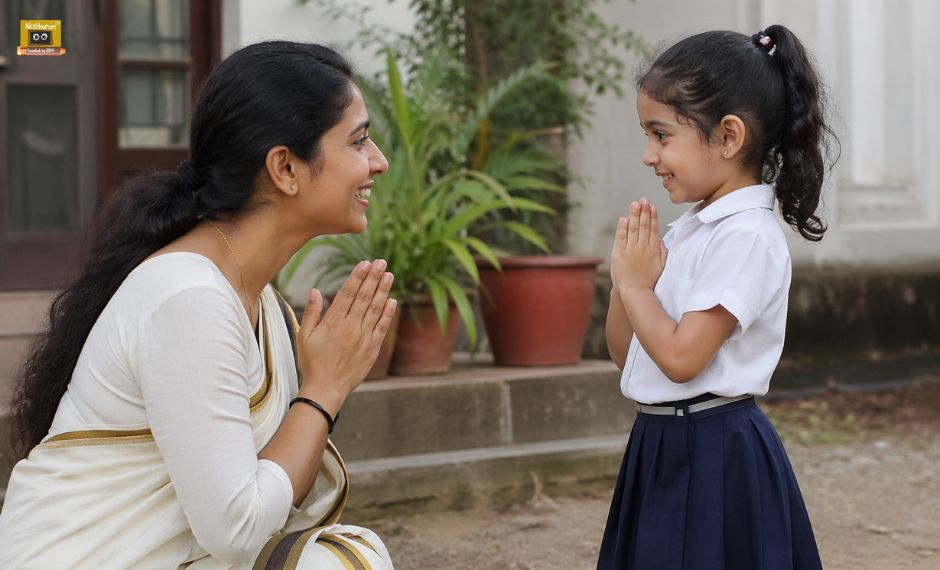
"Say something in Malayalam." We’ve all whispered this to our kids while they stare blankly at a relative on a video call. It’s frustrating because you know they understand every word being said to them, but they just won't- or can't- speak back. The problem is usually that we try to teach them formal textbook greetings that sound weird in a real conversation. If you want them to actually talk, you have to give them the casual words we use at home every day.
Why Your Child Isn’t Speaking Back
Most children in Malayali households abroad are "passive listeners." They know when you’re telling them to finish their food or put on their shoes, but they don't have the "starter kit" of words to respond. When we push them to say things like Namaskaram, it feels like they’re giving a speech in a play. It’s stiff, and it makes them shy.
If you want to make Malayalam learning for kids feel natural, you have to stop treating it like a school subject. The goal isn't to make them scholars; it’s to give them enough confidence to go to Kerala and not feel like a tourist.
The Casual Malayalam Greetings
In a real Malayali home, we don’t use formal greetings with family. We use short, warm phrases that check in on people. Here are the first few words your child should learn to actually sound like a local:
Sugamano? (How are you?): This is the most used phrase in our language. Teach your child to ask this as soon as they see an aunt, uncle, or grandparent. Sugamanu (I’m fine), this is the automatic answer they need to know. If they can say this one word, they’ve already successfully navigated a conversation.
Enthokke undu? (What's up? / How is it going?): This is a very common, relaxed way to ask how someone is doing. It’s much more human than a formal greeting.
Entha vishesham? (Any news? / What's new?): This is the classic Malayali conversation starter. It’s a great way for a kid to show they are interested in what’s happening back home.
Evideya? (Where are you?): On a video call, kids love asking this. It’s a simple, one-word question that usually gets a long, descriptive answer from the person on the other side.
Moving from Speaking to Reading
Once they are comfortable saying these words, you can slowly look into Malayalam reading for beginners. But don't start with a thick book of vowels and consonants. That is the quickest way to make a child quit.
Instead, use "Sight Words." Write "Sheri" (Okay) or "Pokaam" (Let’s go) in Malayalam script on a sticky note and put it on the fridge. Since they already know the sound and the meaning, the letters become a label for a thought they already have. This makes the transition to Malayalam reading for beginners much smoother because they aren't learning abstract symbols- they are learning how to write their own thoughts.
Practical Ways to Use Malayalam at Home
You don't need a designated 'study hour'. In fact, those usually end in arguments. Just replace five common English words with Malayalam equivalents in your daily routine:
Mealtime: Instead of "Do you want more?", ask "Mathiyo?" (Is it enough?).
Going Out: Instead of "Let’s go to the car," say "caril pokaam."
Asking for Water: Teach them to ask for "Vellam" instead of "Water."
Agreeing: Encourage them to say "Athe" (Yes) or "Sheri" (Okay) instead of the English versions.
The Accent Problem
A lot of NRI parents stop their kids mid-sentence to correct their "Ra" or "La" sounds. Don't do this. If they feel like they’re being graded on their accent, they will stop trying altogether.
Think of it this way: if they say "Nanni" (Thank you) with an English accent, the person in Kerala still knows they are saying thank you. The connection is made. The "perfect" accent comes later with more listening, but for now, we just want them to open their mouths and speak.
Why Social Learning Helps
Sometimes, a child will refuse to speak Malayalam with their parents but will happily try it with other kids. This is why structured Malayalam learning for kids through interactive platforms can be so effective. When they see other children living in the US, UK, or Dubai also struggling with the same sounds, the shame of not knowing the language disappears. It becomes a fun group activity rather than a lecture from Mom and Dad.
Final Thoughts for Busy Parents
You don't need to turn your home into a classroom. The goal is to make Malayalam a normal part of your day, whether you’re driving to school or sitting for dinner. If you find it hard to keep up, that’s where we can help. At Akshharam, we specialize in teaching kids who grow up outside Kerala. We make sure our lessons feel like a fun conversation rather than another boring task on their schedule. Having a guide helps take the pressure off you as a parent while giving your child a space to practice with other kids just like them. By sticking with these simple phrases, you’re giving them a gift they’ll cherish for the rest of their lives.