
What to Teach Children After Vidyarambham: A Learning Roadmap
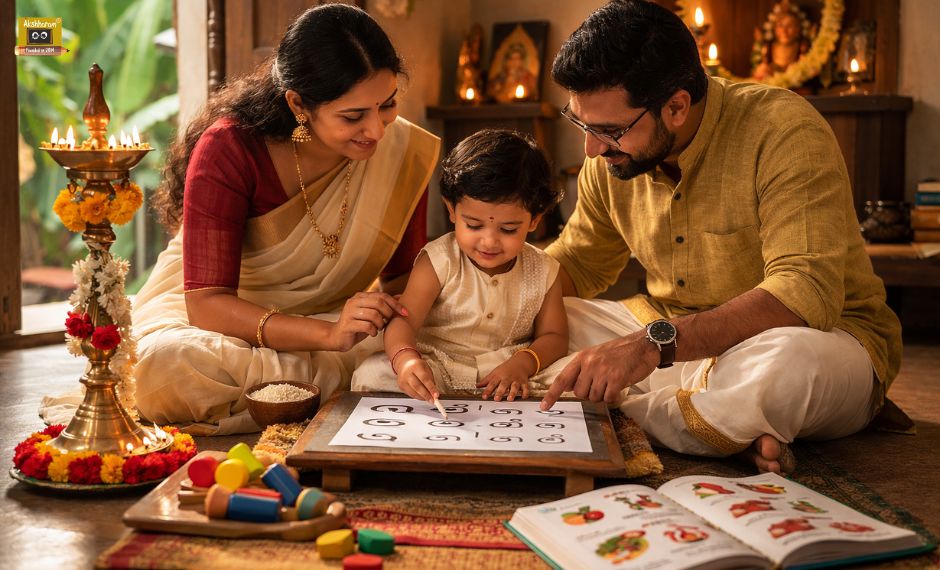
Vidyarambham is a beautiful beginning. It is the point when a child is introduced to learning. For many parents, it is an emotional, spiritual, and special experience. But once the ceremony is completed, the biggest question that arises is:
What next? What should we actually teach the child after Vidyarambham?
This is where many parents feel confused. Some rush into textbooks. Some start multiple classes. Some wait too long, thinking the child is “too small.” All of these create problems later. Learning after Vidyarambham doesn’t need pressure, speed, or stress. It needs structure, simplicity, and consistency. Here’s a practical learning roadmap that makes sense for real children and real families.
Step 1: Start with the Script
Since your child isn't hearing Malayalam at home, the script is their only entry point. You cannot skip straight to speaking.
The Foundation: Start with the Vowels (Swaraksharangal). Don't just show them the letter; focus heavily on the sound associated with it.
Visual Association: Use flashcards where the letter is the hero. Since they don't have a background in the language, they need to see the character 'അ' and immediately connect it to the sound "A" without confusion.
Small Steps: An introduction to a beginner Malayalam learning class online is most effective here because it provides a systematic way to learn the 50+ characters of the Malayalam alphabet without the child feeling overwhelmed.
Children must first understand: “This letter looks like this, and it sounds like this.”
Step 2: Building a Vocabulary (Word Formation)
Once a child can recognize letters and their sounds, the next logical step is putting them together. They need to see that these symbols aren't just art-they form meaningful words.
Two-Letter Words: Start with simple, non-complex words like Amma (Mother), Aana (Elephant), or ila (Leaf).
Categorization: Group words by themes - colors, animals, or body parts. This helps a student who has zero exposure to the language build a mental dictionary from scratch.
Regular practice works: Daily practice makes a real difference. Even 10-15 minutes of daily word practice helps children remember the letters and sounds. It keeps the script fresh in their mind without tiring them out.
Step 3: Moving into Sentence Making
Once a child knows enough words, you can start showing how those words come together to make simple sentences. Just simple lines using words they already know. This is when the language becomes "alive."
Simple Patterns: Begin with "This is a..." (Ithu oru... aanu) sentences. For instance, "Ithu oru poocha aanu" (This is a cat).
Interactive Learning: Teach them to label things they see in their house in Malayalam. It moves the language from a textbook into their actual environment.
Structured Practice: Enrolling in Malayalam classes for children is particularly helpful at this stage. A teacher can guide them through grammar and sentence structure in a way that feels like a natural progression rather than a difficult chore.
Step 4: Encouraging Basic Conversation
The final step of this plan is communication. After the script is mastered and the vocabulary is built, the child needs a safe space to try speaking.
Listen and Repeat: Use simple audio clips or rhymes. Even if they don't understand every word yet, repeating the sentences helps with their Malayalam tongue and pronunciation.
No Pressure: Don't worry about perfect grammar or accents initially. The priority is getting them to use the words they've learned in a conversational way.
Common Mistakes to Avoid
Many parents unintentionally slow down their child's progress by following old-school methods. One common mistake is comparing their child's progress to that of kids living in Kerala. Remember, a child in Kerala is immersed in the language 24/7. Your child is starting from zero.
Another mistake is focusing too much on writing and not enough on recognition. If a child can write a letter but doesn't know what sound it makes, they aren't learning a language - they are learning to draw. Focus on the sound-letter connection first.
How Parents Can Help at Home
Even if you enroll your child in an beginner Malayalam learning class online, your role at home remains important. You don't need to be a teacher; you just need to be a supporter.
Try to point out letters in the real world. If you see a Malayalam newspaper or a sign, ask them if they recognize any vowels. This "gamification" makes the learning feel less like school and more like a secret code they are uncovering. At Akshharam, we always encourage parents to celebrate the small wins- like the first time a child reads a three-letter word correctly.
Why Structure is Key
For a child with no Malayalam exposure, the language is a puzzle. If you give them the pieces in the wrong order- like trying to teach them to speak before they know the words they will get frustrated and quit.
By following this script-to-conversation roadmap, you ensure that the promise of Vidyarambham actually leads to a child who can read, write, and eventually speak their mother tongue with confidence. This is exactly why Akshharam designs its Malayalam classes for children with a logical, step-by-step flow. We take the child from the very first stroke of the pen to their first full sentence, making sure they feel confident at every stage of the journey.