
Malayalam Alphabet Guide: How to Read and Write Letters Easily
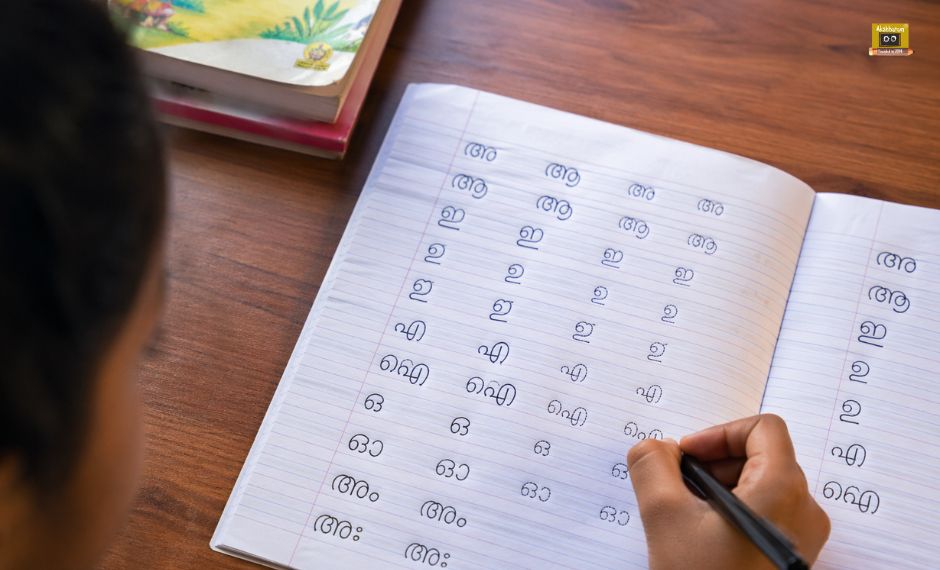
For a child living in Kerala, the alphabet is just a way of writing words that they already hear every day. But for a student living abroad who has never heard Malayalam at home, the situation is different. They aren't remembering a language; they are looking at 51 complex shapes that have no meaning to them yet. Without any knowledge of the language, these characters don't look like letters; they look like a bunch of similar patterns that are confusing. To make progress, we need to stop thinking of the alphabet as a memorization of a list and start thinking of it as a foundation for all the sounds they will eventually make.
Why Learning the Malayalam Alphabet Feels Difficult
In a classroom in Kerala, teachers start with vowels and move to consonants because the kids already have a vocabulary. For a student with zero exposure, this official order is confusing. It feels like a math problem with no answer.
The struggles include:
The letters look similar to each other
No association between the symbol and the sound
Difficulty recalling the shape of the letter
No idea of how the letters come together to form a word
At the same time, this difficulty is often more perceived than real. With the right guidance and consistent practice, most students are able to grasp the Malayalam alphabet comfortably.
Malayalam Alphabet Basics (What You Actually Need to Know)
Before learning the strategy, here’s a simple breakdown of the script.
1. Vowels (സ്വരങ്ങൾ)
These are the base sounds.
അ (a)
ആ (aa)
ഇ (i)
ഈ (ee)
ഉ (u)
ഊ (oo)
എ (e)
ഏ (ae)
ഒ (o)
ഓ (oa)
These sounds are the foundation of pronunciation.
2. Consonants (വ്യഞ്ജനാക്ഷരങ്ങൾ)
Some common examples:
ക (ka)
ഖ (kha)
ഗ (ga)
ച (cha)
ജ (ja)
ട (ta)
ത (tha)
പ (pa)
മ (ma)
Every consonant carries an inherent sound, which combines with vowels to form words.
One important advantage of Malayalam is that it is highly phonetic. Unlike English, where similar letter combinations can produce different sounds (like “put” and “cut”), Malayalam letters retain their sound even when combined. This consistency makes reading much more intuitive once the foundational sounds are clear.
3. How Letters Form Words
Example:
പ + റ + വ = പറവ (Parava – bird)
This is where learning becomes powerful. Once a student understands letters, they can start building words - even without prior exposure.
The Smarter Way: Learn Through Shape Grouping
The Malayalam script consists of very curved characters, and many of them look similar when you first see them.
It is not efficient to try to memorize all these characters one by one.
A better approach is to try to group these characters based on their shape. This makes it much easier to learn Malayalam for beginners because it turns a memory task into a visual pattern game.
For example:
Letters with similar loop structures
Letters with small differences in the tail end
Letters with open and closed curves
This helps the students:
To look for patterns, not memorize at random
To avoid confusion between similar-looking letters
To develop faster visual recognition
This approach makes the learning process much more manageable.
Why Structured Classes are Necessary
You cannot teach this method effectively through a video or a book alone. If a child has no exposure to the sounds, they need a teacher to hear them and correct small mistakes in pronunciation before they become habits.
This is why the best way to learn Malayalam for beginners is through a structured language communication class. You need a teacher who understands that the student is a blank slate. In our Malayalam classes for children, we do not assume the student knows any words. We start with the ink on the paper and the sound in the throat. We also provide a social environment where they can see other kids struggling with the same shapes. This makes them much more willing to keep trying, even when the letters get complicated.
The Result of the Process
Learning Malayalam when you have never heard it spoken is a gradual process that takes time. There will be days when the letters look like a mess, and the words do not make sense. But there is a specific pride that comes from building a language from the ground up.
When your child finally reads their first full sentence-not because they heard it before, but because they built it using the letters they mastered - that is when the method is proven. They are not just picking up bits and pieces of a language; they are earning it through a logical process.
Final Thoughts
If your child has zero exposure to the language, do not try to make them speak right away. Let them focus on the script. Let them learn the alphabet families and the sounds associated with them. It is a slower method for starting out, but it is the only method for building a foundation that will last.
At Akshharam, we are specialists in this step-by-step method. If you want to learn Malayalam online for yourself or your child, we do not take shortcuts. We start with the loops, we build the words, and eventually, we find the conversation. It starts with one circle at a time.