
Learn Malayalam for Beginners Through Daily Conversations: A Practical Guide
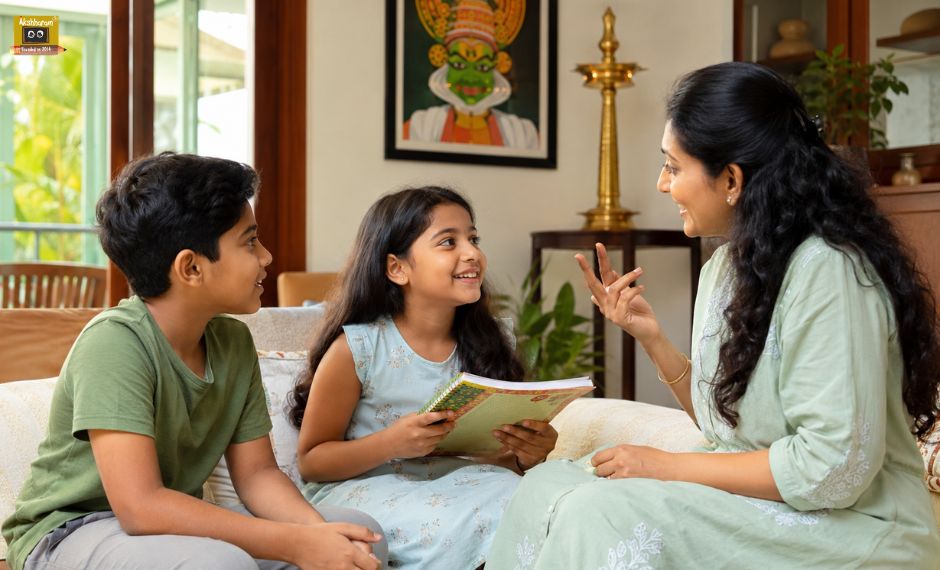
We’ve all had that moment. You’re at a family gathering, and your child’s grandparents ask them a simple question in Malayalam. Your child looks at them, looks at you, and eventually just shrugs or answers in English. It’s a bit heart breaking, isn’t it? You want them to have that connection, but when they spend all day in an English-speaking world, Malayalam feels like a puzzle they just can’t solve.
The problem is that for a kid with zero background, the language sounds like one big, fast blur. To help them learn Malayalam for beginners, we have to break that blur. We have to give them something to look at while they listen. If we want them to actually start talking, we need to stop making it a subject they study and start making it a tool they use.
Use the Eyes to Help the Ears
Most people think you learn to speak first and read later. But when there is no Malayalam in the world outside your house, the ears need help. This is why Malayalam reading for beginners is actually the fastest way to get a kid talking.
Think of the Malayalam script as a set of training wheels. When a child sees the letters for a word, their brain has a visual hook. They aren’t just guessing a sound; they are seeing the map of that sound. Once they can recognize a few letters, the language stops being noise and starts being a set of building blocks. By starting with the script, you are giving them the confidence to try saying the words out loud because they actually understand how they are put together.
The Morning Window Strategy
Instead of a formal lesson, use the five minutes when you’re driving them to school or waiting for the bus. This is the best time for Malayalam learning for kids because they are already focused and you have their full attention.
Don’t worry about grammar. Just point at things they see every day.
- Point at a Tree and say, “Maram.”
- Point at a House and say “Veedu.”
- Point at a Bird and say “Pakshi.”
- Point at a Car and say, “Vandi.”
The trick is to have a small card or a phone screen where they can see these words written in the script. When they see the word “Maram” while looking at a tree, the language becomes a real thing, not just a sound Mom makes. It’s a visual association that sticks much longer than just hearing the word once.
Mastering the Action Commands
If you want your child to actually use the language, start with the words that get things done. In any Malayali home, there are a few power words that we use all the time. Using these in your daily routine helps the child understand the rhythm of the language without needing a translator.
“Ivide varoo” (Come here) – Use every time you call them for dinner.
“Mathi” (Enough/That’s enough) – Use this when they are filling their plate or playing.
“Nirthu” (Stop it) – Perfect for when they are being a bit too loud.
“Poyi urangoo” (Go to sleep) – The final command of the day.
Because these are tied to actual actions, the child learns the meaning instantly. If they are also working on Malayalam reading for beginners, you can show them these words on a simple chart in their room. When they can see the word “Mathi” and use it themselves, they feel a sense of power over the language. They aren’t just learning anymore; they are communicating.
Making the Language Visible at Home
Since your child isn’t seeing Malayalam on billboards or TV shows, you have to create a visual landscape at home. This doesn’t mean you need to turn your house into a school. It just means making the script a normal part of their day.
Try putting a few simple, clear labels on things they use every single day. Use the most basic words possible:
- On the Dining Table, put a note that says “Mesha.”
- On their Water Bottle, put a note that says “Vellam.”
- On the Mirror, put a note that says “Kannadi.”
- On the Door to their room, put a note that says “Vathil.”
When they see these letters every time they get a drink or look in the mirror, the script starts to feel like “theirs.” It isn’t a strange or scary alphabet anymore. It’s just the word for their water. This kind of passive exposure is one of the most effective ways to support Malayalam learning for kids.
Consistency Over Perfection
The biggest hurdle is often our own desire for them to be perfect. We want them to have the right accent and the right grammar immediately. But for a beginner, that’s a lot of pressure.
If they say “Vanda” instead of “Vandi,” don’t give them a lecture on phonetics. Just say the correct word back to them and keep moving. The goal is to keep the conversation going. If you can give them ten minutes of these small interactions every day, you are building a foundation that will stay with them for life.
The Human Connection
At the end of the day, your child will learn Malayalam because they want to connect with you and their family. They need to see that the language is a bridge to their roots, not a wall they have to climb. Apps can give them a few words, but they can’t give them a reason to care.
They need a guide who understands that they are starting from a blank slate. They need a system that builds them up from the script into real-world talk. This is why Akshharam is so important for diaspora families. We focus on the script-first approach to make Malayalam reading for beginners feel like a series of small wins. By turning the language into a practical tool for daily life, we help kids find their voice and stay connected to where they come from. With a little bit of daily effort and the right method, your child can start talking back in the language that truly belongs to them.